If rubber tape (IZR) is the “skin” that tightly wraps a connection, then mastic tape is the “muscle” that fills the volume.
Many electricians face situations where they need to insulate an uneven connection (bolt, complex busbar shape, sharp corners). Regular tape won’t sit hermetically there — air pockets will remain. This is where mastic comes into play.
TL;DR — Summary
- Mastic tape: thick, soft tape, similar to modeling clay. Fills voids and smooths corners.
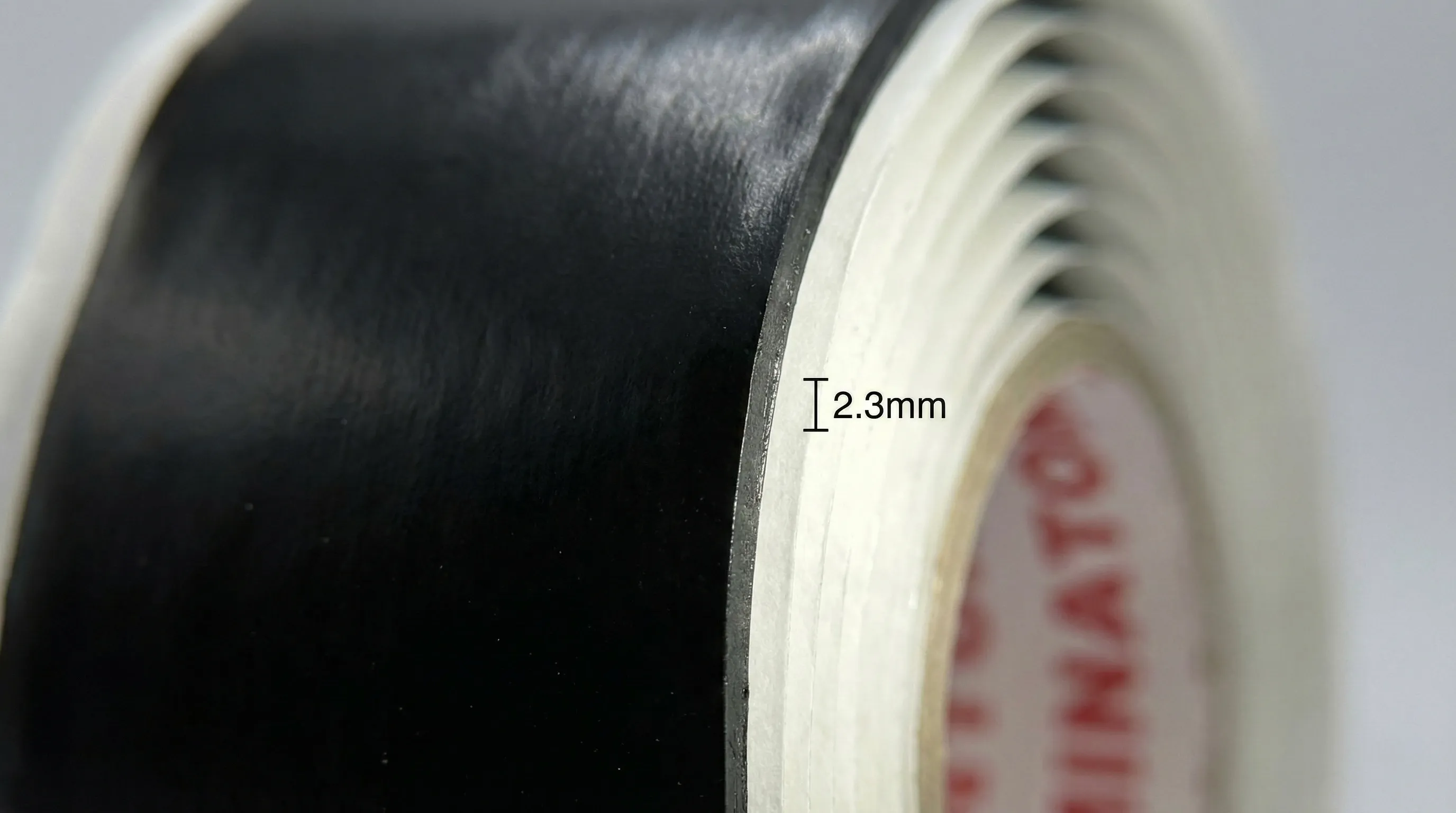
- Vinyl mastic (IZM): thickest (2.3 mm), for large irregularities.
- Rubber-mastic (IZRM): balance of strength and plasticity (1.65 mm).
Why Such Thickness?
Look at the numbers:
- Standard PVC tape: 0.13–0.22 mm
- Self-vulcanizing rubber (IZR): 0.5 mm
- Vinyl mastic (IZM): 2.3 mm!
One layer of IZM replaces 10-15 layers of standard electrical tape in thickness.
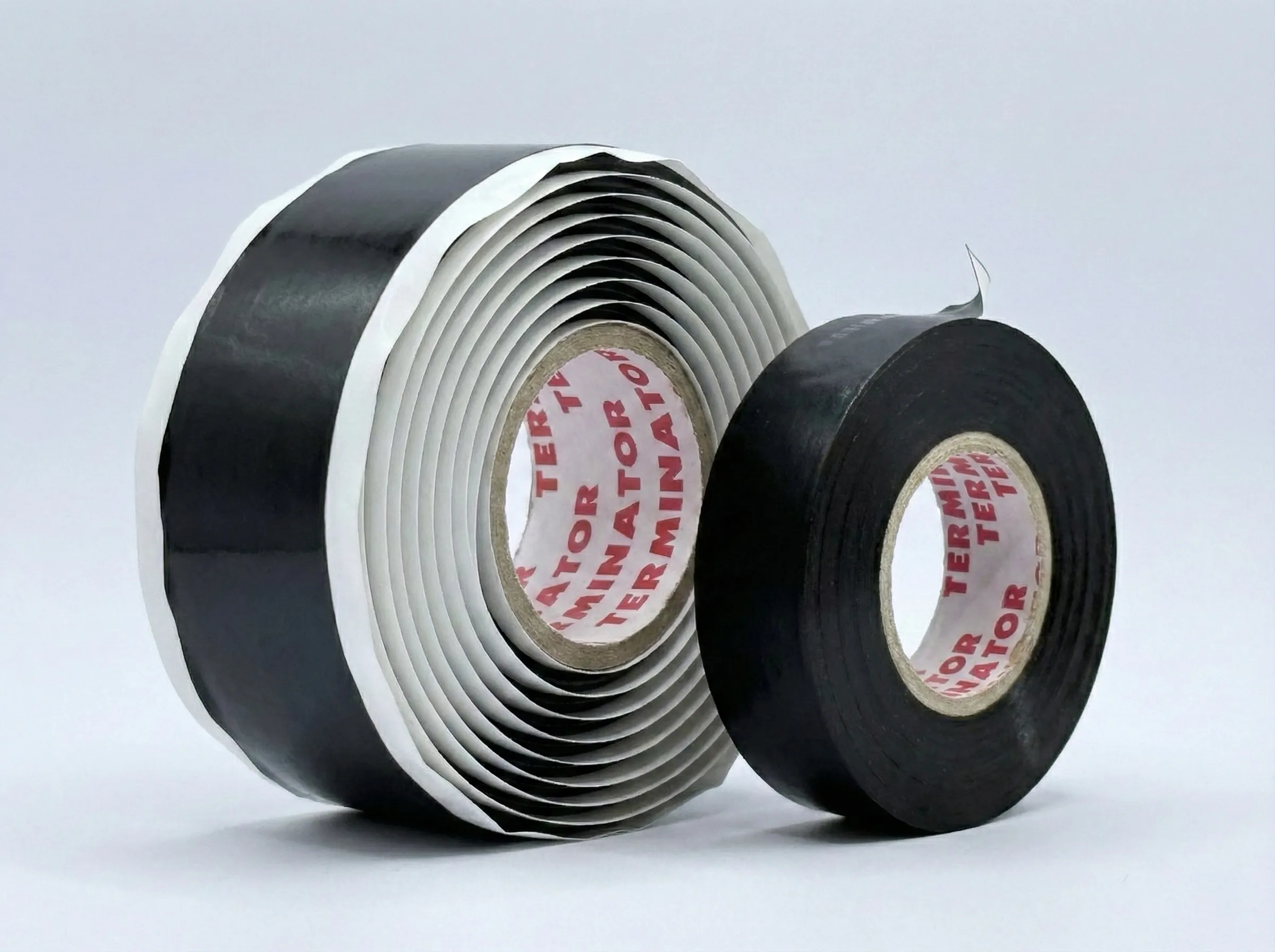
This property allows it to work as a filler. If a bolt sticks out of a busbar, you just mold mastic around it. It’s soft, flows around the shape, and leaves no air inside.
Material Breakdown
1. Vinyl Mastic (IZM)
This is a pure filler. Thickness 2.3 mm — like soft clay on a backing.
Where to use:
- Smoothing sharp edges before wrapping main insulation
- Sealing pipe entries (plugging the gap)
- “Cushion” for mechanical cable protection
Important: IZM has a dielectric strength of 19 kV/mm. It is a full-fledged insulator, not just “putty”.
2. Rubber-Mastic (IZRM)
This is a hybrid — ethylene-propylene rubber base, but softer and more pliable. Thickness 1.65 mm.
Universal “repair” tape for mines, factories, and harsh conditions. Stronger than pure mastic in tension, but softer than pure rubber.
How to Apply Correctly?
Unlike self-vulcanizing rubber (IZR), mastic does not need to be stretched 3 times.
- Preparation. Clean the surface.
- Application:
- Vinyl mastic IZM: just lay tightly, stretching slightly. You can mold it with hands to form a monolith.
- Rubber-mastic IZRM: stretch moderately (50–70%) to activate rubber properties.
- Finish. Cover with a layer of PVC tape (IU1K or IC6P) for protection against cuts and UV.
When to Choose Mastic vs. Rubber IZR?
| Situation | Choice | Why? |
|---|---|---|
| Even cable / Smooth pipe | Rubber (IZR) | Thinner, tight shrink, more economical. |
| Bolted connection (“Hedgehog”) | Mastic (IZM) | Molds around all corners without air. |
| Universal repair | Hybrid (IZRM) | Strong and sticky. The golden mean. |
FAQ
No, not as much. Mastic tape just needs to be pressed firmly or stretched slightly for placement. It works by its mass and adhesion, not by clamping force.
Yes. Vinyl mastic (IZM) holds moisture perfectly. However, like rubber, for durability (10+ years), we recommend protecting it with a layer of PVC tape against direct UV radiation.
Composition and purpose. IZM is pure vinyl mastic (2.3 mm), super-soft, for filling large holes. IZRM is a hybrid of rubber and mastic (1.65 mm), it is mechanically stronger but still fills irregularities well.