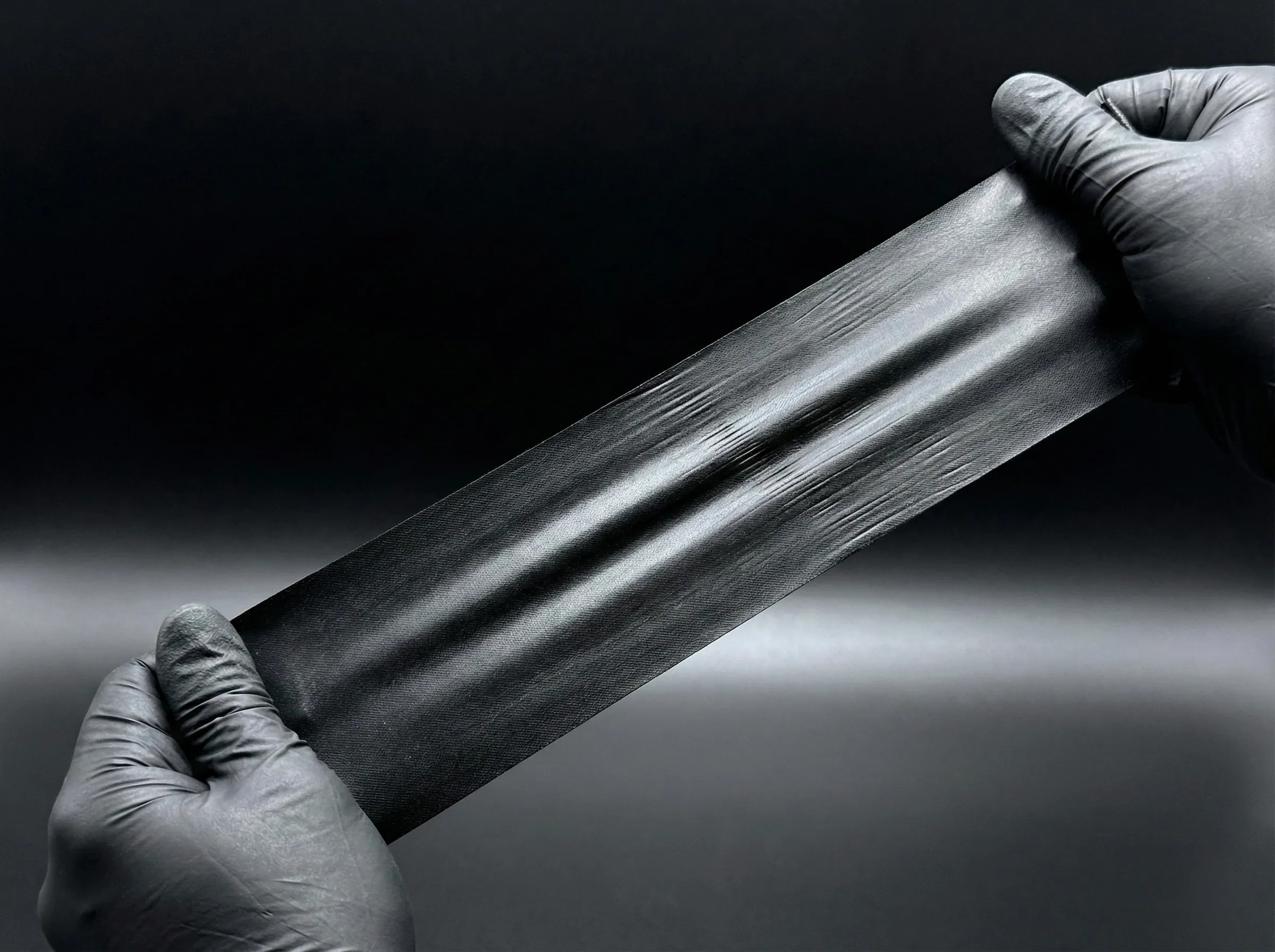
Self-vulcanizing tape is perhaps the most underrated tool in an electrician’s arsenal. Many beginners avoid it because it “doesn’t stick” like regular tape.
In this article, we’ll cover how IZR rubber tape works: why stretching is critical and how it transforms into monolithic insulation.
TL;DR — Summary
- No Glue: The tape works via diffusion (interpenetration) of rubber layers.
- Golden Rule: You must stretch the tape 2-3x and maintain tension throughout. Without this, it won’t work.
- Waterproof: 100% protection against water. Suitable for submersible pumps.
- Electrical: Dielectric strength 28 kV/mm — designed for high-voltage cables.
What is Cold Vulcanization?
In everyday life, we are used to adhesion — sticking one material to another using glue. Self-vulcanization is a different process called cohesion.
The tape is made from polyisobutylene rubber (PIB). This material has the property of merging into a homogeneous mass upon close contact and absence of air between layers.
When you stretch the tape, you create tension in the material and expose active molecular chains. By layering it with tension, you trigger the diffusion process: boundaries between layers disappear. Within 24 hours, the tape turns into a solid rubber tube that cannot be unwound — only cut.
Instruction: Wrapping Technique
90% of mistakes when using rubber tape come from lack of tension. If you just wrap it around a pipe, it will fall off in a day.
Step 1: Preparation
The surface must be clean. Dust and grease prevent layers from touching.
Step 2: Stretching (Critical!)
Remove the protective liner. Take a section of tape and stretch it until the width narrows to 2/3 of original (translates to 2-3x length).
Stretching activates the material and creates clamping force. The tape tries to return to its original state, creating pressure at the connection point.
Step 3: Overlap Wrapping
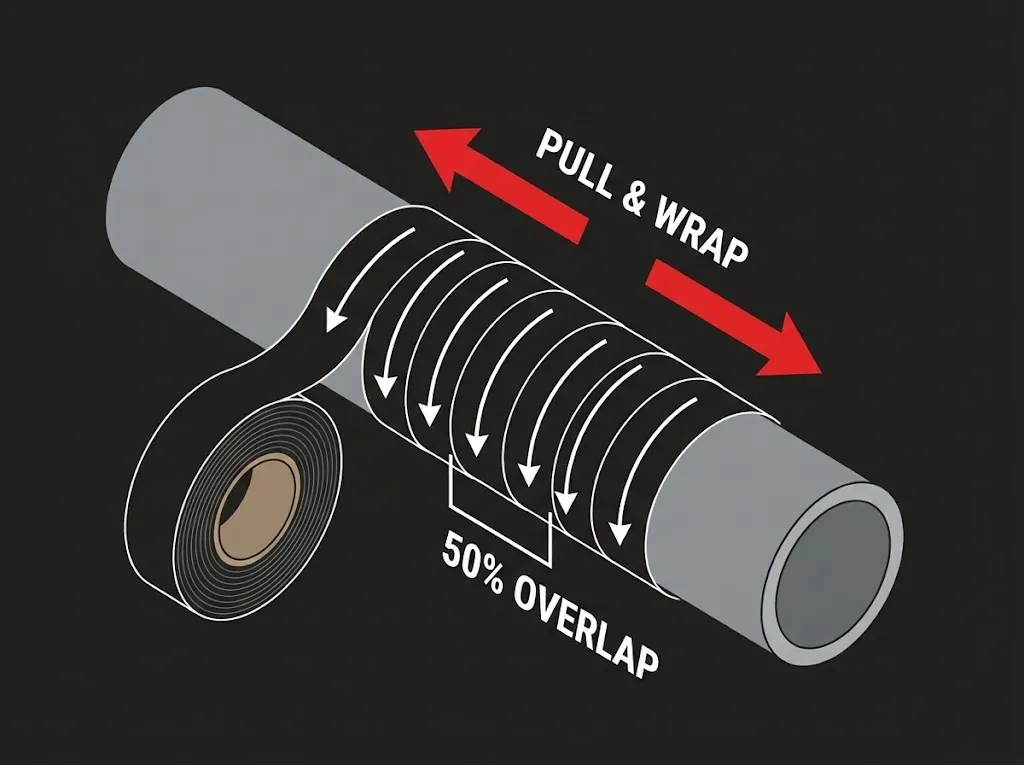
Wrap with 50% overlap — each layer covers half of the previous one.
Important: Make the first and last wraps with 100% overlap (wrap on wrap) — this “lock” secures the start and end of the wrap.
Step 4: Protective Layer
Rubber tape is vulnerable to UV light and mechanical damage (cuts). Professional standard — always cover it with 1-2 layers of PVC tape. For outdoor work, we recommend all-weather IC6P; for indoor use — IU1K.
Where to Use?
1. Sealing Entrances and Sleeves
For connections working outdoors or underground. Rubber fills all irregularities, preventing moisture from reaching contacts.
2. Pipe Repair (Emergency)
If a pipe bursts, rubber tape can serve as a temporary clamp. Thanks to its elasticity, it tightly fits the leak area. Tip: for pipes, use maximum layers (5-6) to hold pressure.
3. High Voltage Work
High dielectric strength allows insulating busbars and high-voltage cables where regular PVC tape would fail due to air breakdown risk.
What About Mastic Tapes?
Besides rubber IZR, there are mastic tapes (IZM, IZRM). They’re thicker, softer, and work differently: they don’t require heavy stretching — they “mold” to the surface instead. Used for filling voids, pipe sealing, and insulation restoration.
Learn more: Mastic Tapes: When Rubber is Not Enough
FAQ
No. Vulcanization happens at room temperature. The key is stretching the tape 2-3x and maintaining tension throughout wrapping.
Yes, but with limits. It holds seal perfectly, but high water pressure (over 1-2 atm) might push the insulation out. For pressurized pipes, a top layer of reinforced tape or a clamp is required.
It has no glue. Adhesion happens only to itself (cohesion). This is a plus: it doesn't dirty hands or wires, and when removed, it is cut clean with a knife without sticky residue.