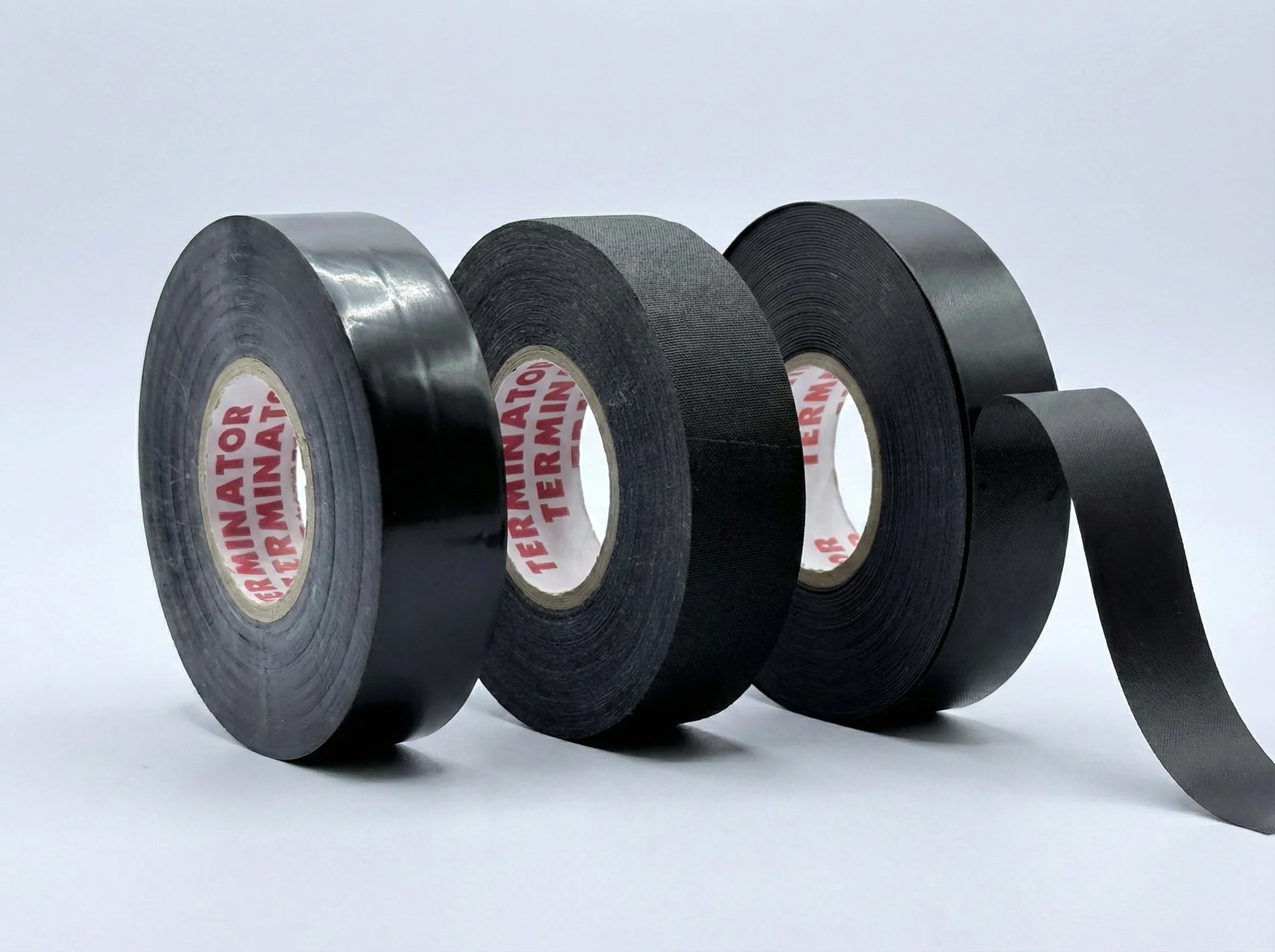
Choosing insulation tape seems simple at first glance. But when it comes to professional electrical work, the wrong material choice can be costly: from a simple “peeled off in the cold” to short circuits and fires.
In this fundamental guide we’ll examine the physics and chemistry of three main types of insulation tapes: PVC, Fabric, and Rubber.
TL;DR — Quick Summary
- PVC Tape — classic for 220V (outlets, panels). Holds up to 6kV. Rubber adhesive works down to -40°C.
- Fabric Tape — for automotive. Fleece (anti-squeak in cabin), fabric (under-hood up to +150°C).
- Rubber Tape — for extreme conditions (water, high voltage up to 28kV). No adhesive, vulcanizes. Requires PVC protection layer on top.
- Golden Rule: Thicker tape = higher strength. Professional (0.18-0.22mm) > Basic (0.13mm).
1. PVC Insulation Tape
This is the “classic” of electrical work. But PVC comes in different grades. TERMINATOR has two main lines, each for specific tasks.
The Physics
PVC tape works as a dielectric barrier. Quality is determined by two parameters: base thickness and adhesive type.
- Basic Series (0.13 mm): Classic thickness. Used for color phase marking and simple indoor insulation.
- Professional Series (0.18-0.22 mm): Thickened base with rubber adhesive for extreme temperature performance.
Rubber adhesive doesn’t “vitrify” in cold. The glass transition temperature of rubber is below -40°C, while cheap acrylic loses adhesion (surface bonding) at just -10°C.
When to Use?
- Primary Insulation: Splices, terminals, busbars (up to 6000V).
- Phase Marking: Color-coding (L1, L2, L3, N, PE) — thanks to the color range.
- Sealing: Protection from moisture and mild chemical exposure.
For extreme conditions, all-weather tapes exist (working down to -18°C) and flame-retardant self-extinguishing versions (for facilities with enhanced fire safety requirements).
Technical Comparison
| Parameter | TERMINATOR IU1K (Premium) | Basic PVC (Standard) |
|---|---|---|
| Thickness | 180-220 µm (0.18-0.22 mm) | 130 µm (0.13 mm) |
| Breakdown Voltage | 6,000 V | 3,500 V |
| Elongation | 200% | 150% |
| Adhesive | Rubber | Acrylic / Rubber |
2. Fabric Tape for Automotive
If PVC is the king of 220V electrical work, fabric tape is the queen of automotive.
Why Fabric for Cars?
Under-hood temperatures can reach +100°C and higher (near the engine block). PVC holds up to +80-90°C, but at +105°C can lose structural integrity. For cabin wiring, PVC works, but under the hood — only fabric.
Fabric tapes based on polyester or fleece withstand extreme temperatures up to +150°C.
Two Types of Fabric: What’s the Difference?
1. Fleece (Velour)
Soft, “fuzzy” tape. Main purpose — sound insulation.
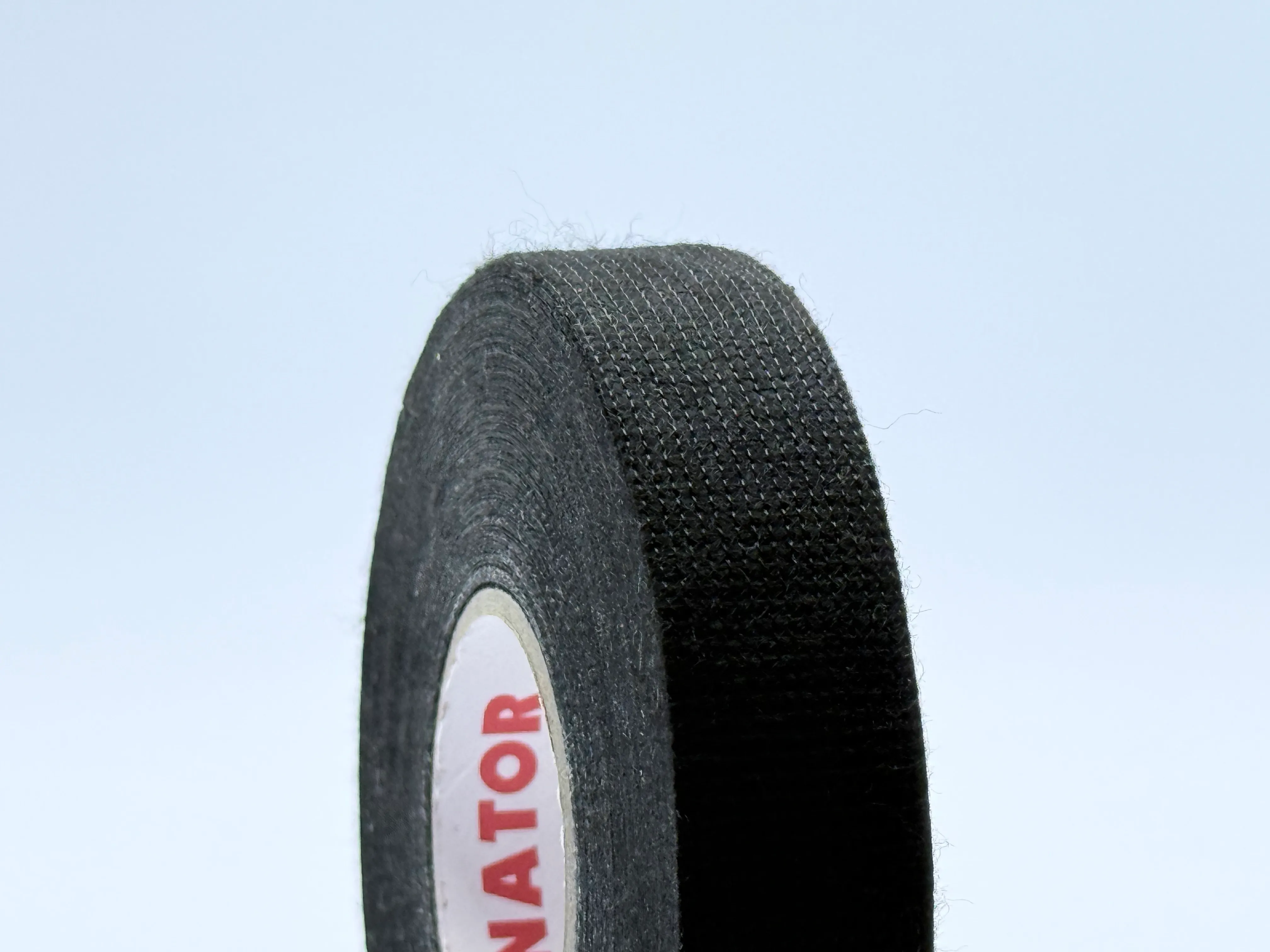
- Application: Car interior.
- Function: Eliminates wire harness squeaks against plastic, protects from noise and vibrations (“anti-squeak”).
2. Polyester (Fabric)
Smooth, rigid, very durable. Main purpose — thermal protection.
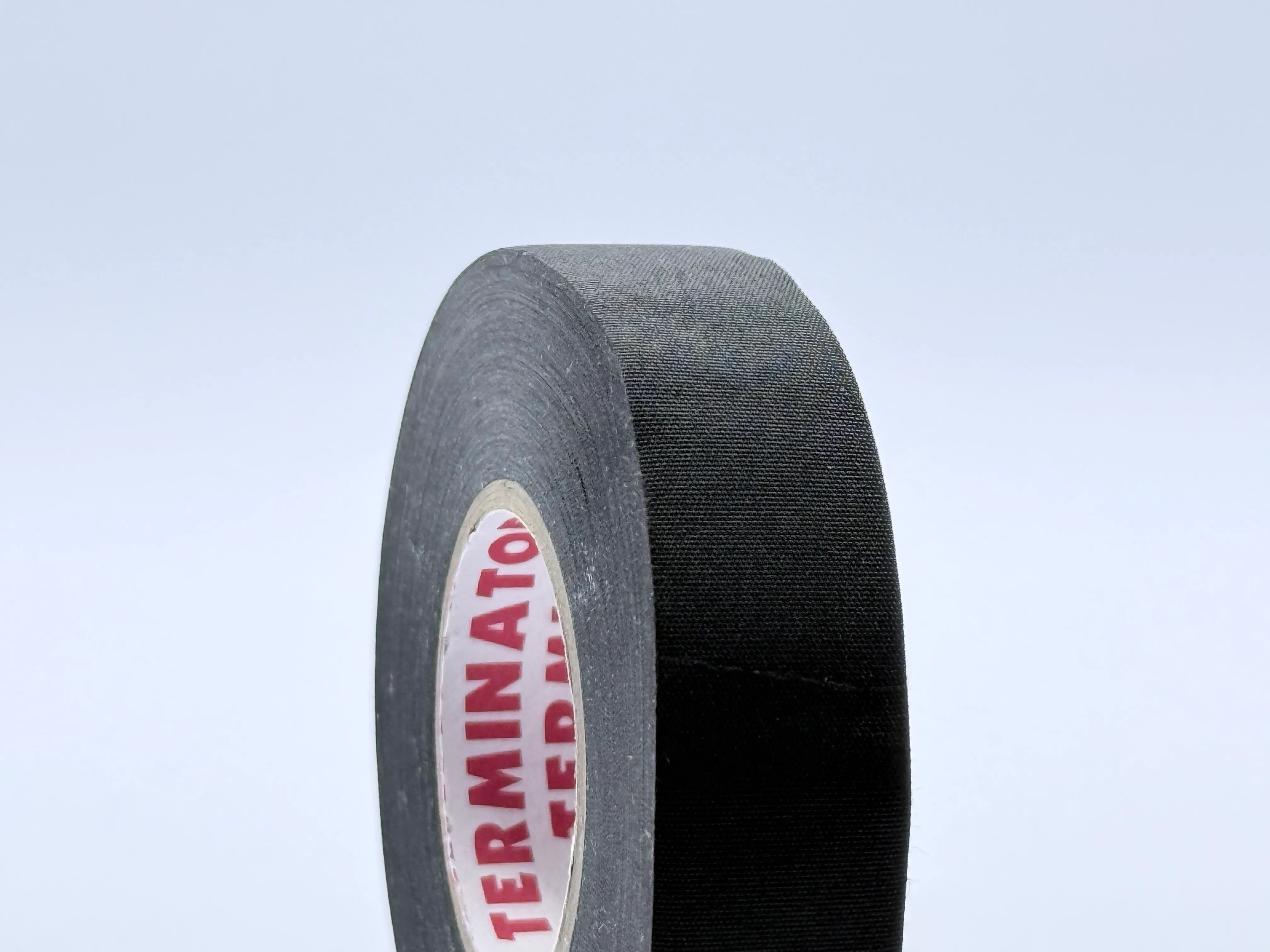
- Application: Under-hood space.
- Function: Protection from abrasion and temperatures up to +150°C.
Reliability Formula
When choosing tape for automotive use, consider the insulation temperature class.
The IZT Fabric series has an operating range up to +150°C, covering peak loads of any civilian engine.
3. Self-Vulcanizing Rubber Tape
This is the “special forces” of insulation. Tapes based on ethylene-propylene rubber.
The Magic Without Adhesive
This tape has no adhesive layer. None at all. It works through vulcanization: when stretching the tape 2-3 times (200-300%), molecular bonds activate. Layers fuse together, forming a monolithic rubber tube.
Learn more: How Self-Vulcanizing Tape Works
Where Is This Needed and How to Apply?
- Underwater Work: Insulation of submersible pumps. Monolithic rubber doesn’t let water through (0%).
- High Voltage: The IZR series holds up to 28 kV/mm.
- Emergency Pipe Repair: Can seal a pipe leak under (moderate) pressure.
Rubber tape provides perfect sealing and dielectric insulation, but it’s soft and vulnerable to cuts and UV radiation. You must always wrap a protective PVC tape layer over rubber tape — this is the “armor” that protects rubber from mechanical damage, sunlight, and abrasion.
Dielectric Strength
For high-voltage lines, calculating insulation thickness is critical:
Where is the material’s electric strength (28 kV/mm for rubber), and is the wrap thickness. One layer (0.76 mm) holds over 21,000 Volts.
Selection Guide Table
| Task | TERMINATOR Recommendation | Why? |
|---|---|---|
| Outlet / Switch / 220V | IU1K Series | Reliable insulation up to 6kV. |
| Wire Harness in Car Interior | IZT Fleece | Eliminates squeaks, soft. |
| Engine Wiring | IZT Fabric | Holds +150°C, chemical protection. |
| Cable Entry to Building / Outdoor | IZR Rubber | Sealing (requires PVC layer on top). |
Never use regular insulation tape to repair cooling system hoses in vehicles. Antifreeze pressure and high temperature will destroy the adhesive. Use only self-vulcanizing tapes or specialized reinforced tape.
Frequently Asked Questions
Yes, but with limitations. Standard PVC tape holds up to +80...+90°C. Under-hood temperatures in summer can exceed this. For complete safety, use fabric tapes (up to +150°C).
It's a tape that becomes a monolith. It has no adhesive. You stretch it, wrap it, and within a minute the layers "fuse" together. The result is a sealed rubber tube.
Reliability. Basic tape (0.13 mm) suits simple tasks. Professional grade (0.18-0.22 mm) offers better dielectric strength, mechanical durability, and works in a wider temperature range.
For phase marking (electrical codes).
- Blue — Neutral (N)
- Yellow-Green — Ground (PE)
- Others — Live/Phase (L)
Yes (for both PVC and rubber). Each layer adds dielectric strength. Three layers of PVC can withstand over 15,000 Volts. The key is wrapping with 50% overlap.